AI Workflow Automation: A Practical Guide for Small Business Scaling
Introduction: The New Standard for Scaling
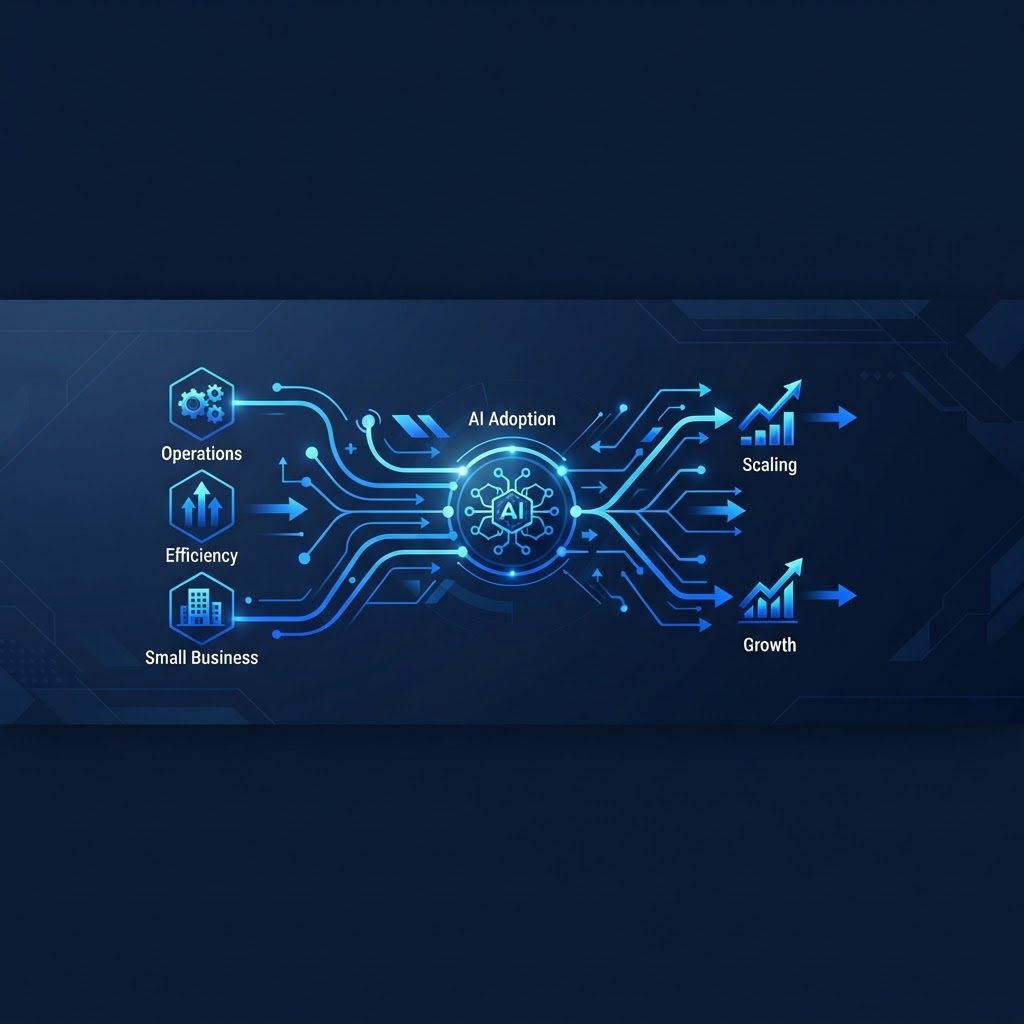
For many small business owners, the dream of scaling often clashes with the reality of operational bottlenecks. As customer demand grows, manual tasks, repetitive data entry, and fragmented communication channels can quickly stifle productivity. At DAS Management Co., we believe the solution lies in intelligent automation. Integrating AI into your daily operations is no longer a luxury reserved for enterprises; it is a critical strategy for small businesses to remain competitive and lean.
Identifying Your First Automation Opportunity
The biggest mistake business owners make when adopting AI is trying to automate everything at once. This leads to "tool fatigue" and disjointed workflows. Instead, follow the rule of the "Three Ds":
- Dull: Tasks that are repetitive and low-value (e.g., invoice sorting, lead tagging).
- Dirty: Processes prone to human error due to monotony (e.g., data migration between spreadsheets).
- Dearth: Areas where you lack capacity, creating bottlenecks (e.g., customer service response times).
Start by auditing your weekly schedule. Which tasks do you perform simply because 'that is how it has always been done'? Those are your candidates for automation.
Low-Hanging Fruit: Where to Start
Once you have identified a candidate process, evaluate it against three criteria: volume, complexity, and impact. Here are three areas where most small businesses see immediate ROI:
1. Customer Support and Communication
Implement AI-driven chatbots or automated triage systems. Tools like Intercom or Zendesk now utilize AI to analyze incoming emails and route them to the correct department, or even generate draft responses based on your knowledge base. This keeps your response time low while maintaining a professional standard.
2. Marketing Content Repurposing
AI is exceptional at turning one long-form asset into many. If you write a blog post, tools like Jasper or ChatGPT can summarize that content into email newsletters, social media captions, and LinkedIn threads. By automating the 'transmutation' of your expertise, you reclaim hours of content creation time.
3. Lead Qualification and CRM Hygiene
Manual data entry into a CRM is the fastest way to lose momentum. Use automation platforms like Zapier to bridge your lead forms with your CRM. AI agents can then 'score' these leads, tagging them by intent, which allows your sales team to prioritize high-value prospects instantly.
Building a Scalable Foundation
Automation is not a 'set and forget' project; it is a cultural shift. To ensure your AI integration is successful, follow these three operational pillars:
- Standardize Before You Automate: You cannot automate a chaotic process. Map out your current workflow steps clearly before introducing any AI tools. If the process is broken, AI will only accelerate the failure.
- Human-in-the-Loop: Always keep a human oversight mechanism. AI tools should draft emails, suggest insights, or categorize data, but final decisions—especially those affecting customer relationships—should be reviewed by a human team member.
- Continuous Iteration: Review your automated workflows every 30 days. Ask yourself: Is this tool saving us time, or is it adding a new layer of maintenance? If it is the latter, iterate or pivot to a simpler solution.
Avoiding Common Pitfalls
While AI is a powerful force multiplier, it is not a cure-all. Avoid these common traps:
- The 'Shiny Object' Syndrome: Don't adopt a tool just because it is popular. Ensure it integrates with your existing tech stack.
- Over-Complexity: Start with simple 'if-this-then-that' automations. Once you master the basics, move to more complex LLM-driven agents.
- Ignoring Data Privacy: As you automate data movement, ensure your systems remain compliant with relevant data protection regulations. Always vet your AI providers for security and reliability.
Conclusion: The Path Forward
AI workflow automation is the bridge between a busy small business and a scalable, efficient enterprise. By starting with high-volume, low-complexity tasks, you create the breathing room necessary to focus on high-level strategy and growth. At DAS Management Co., our mission is to help you navigate this transition with clarity and precision. The goal isn't to replace your team with AI, but to empower your team to operate at their highest potential. Identify one manual task today, and find a way to automate it. Your future, scaled business will thank you.
Book a free discovery call and let's map a custom strategy for your business.
Schedule a Free Call